
Wine Cellar Climate Control
How to Choose the Right Wine Climate Control System
Every wine cellar has unique climate control requirements, and choosing the wrong system can lead to expensive and frustrating problems down the road.
Selecting the right system depends on factors that include:
- The size of your wine cellar
- How the cellar is constructed
- The insulation and vapor barrier
- The amount of glass in your design
- The size of your wine collection
Choosing the right climate control system from the beginning can mean the difference between years of reliable protection for your wine collection and expensive repairs, poor storage conditions, or replacing the wrong equipment later.
The guide below explains the key elements of wine cellar climate control and the most common cooling system options, so you can make an informed decision for your home and collection.
Cellar Size
The size of your wine cellar is one of the biggest factors in determining the correct cooling capacity.
Construction Methods
The way your wine cellar is built affects insulation, airflow, and the type of cooling system required.
Glass & Windows
Glass walls and doors increase heat transfer and often require additional cooling capacity.
Understanding Your Climate Control Options
Choosing the right climate control system isn’t always straightforward. That’s where working with an experienced wine cellar specialist can make all the difference. Alex Madison and the team at Private Label Custom Cellars help homeowners avoid costly mistakes by recommending climate control solutions designed specifically for their cellar, their home, and their wine collection.
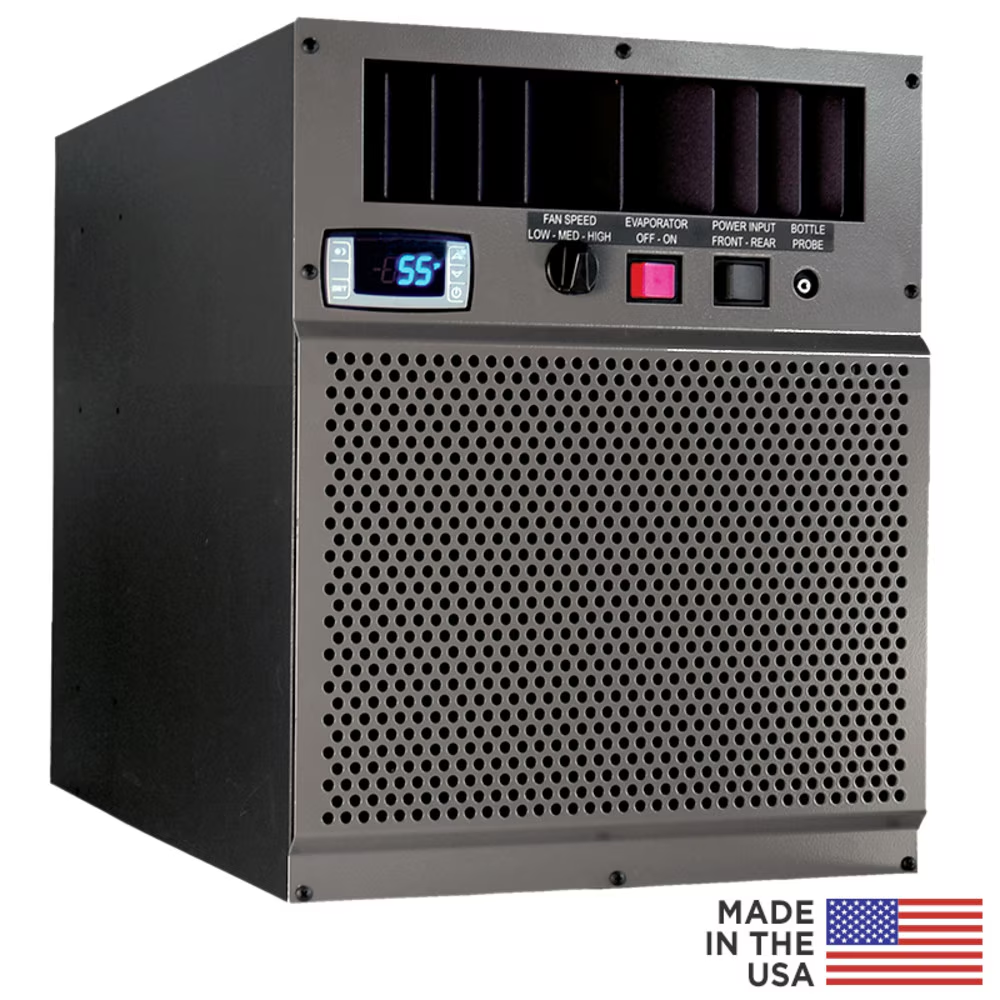
Through-the-Wall Wine Cellar Cooling Units
Through-the-wall wine cellar cooling units are a simple and cost-effective way to control the temperature in a wine cellar. These self-contained wine cellar cooling systems install directly into a wall, ceiling, or floor cavity—often fitting neatly between wall studs—so no ductwork is required.
Because everything is housed in one unit, installation is typically faster and does not require a licensed HVAC technician. The condenser is located inside the cellar, which means these wine cellar cooling units take up some interior space and produce more noise than ducted or split systems.
These cooling units are designed to maintain proper wine cellar temperature control and humidity balance, helping protect wine from heat damage or dry conditions. Many models include digital thermostat controls and optional exhaust configurations to help manage warm air and odors.
Through-the-wall systems are ideal for smaller wine cellars or projects where ease of installation, speed, and budget are key priorities. Despite their simplicity, they are highly effective at maintaining stable wine storage climate systems—even in warm climates.
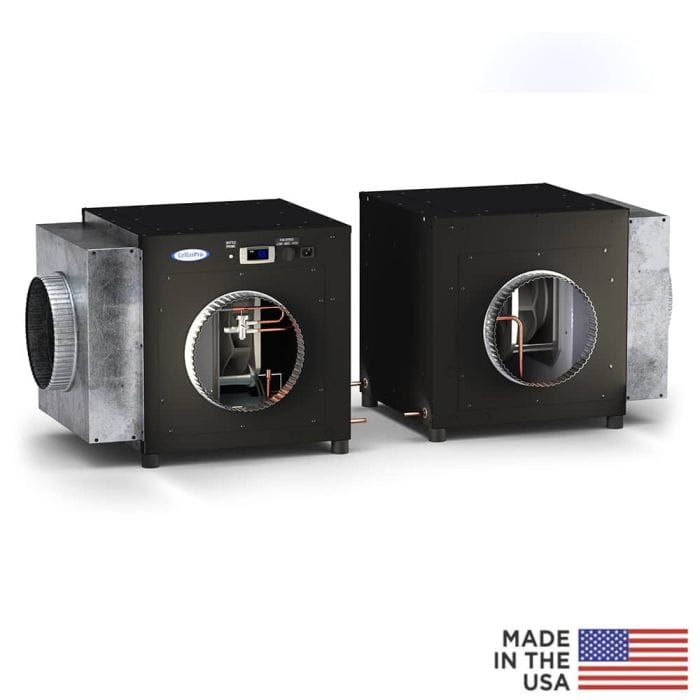
Self-Contained Ducted Wine Cellar Cooling Units
Self-contained ducted wine cellar cooling units deliver cool air into the cellar through ductwork while allowing the main equipment to be installed outside the wine room. This significantly reduces noise inside the cellar and provides more flexibility in wine cellar refrigeration system placement.
Because the unit can be located in an attic, mechanical room, or nearby space, it helps keep the wine cellar quiet, clean, and visually uncluttered. In some cases, existing home ductwork can be used, allowing the system to blend seamlessly into the property.
By removing mechanical components from the cellar itself, ducted systems create a refined wine storage environment with consistent wine cellar climate control and minimal disruption.
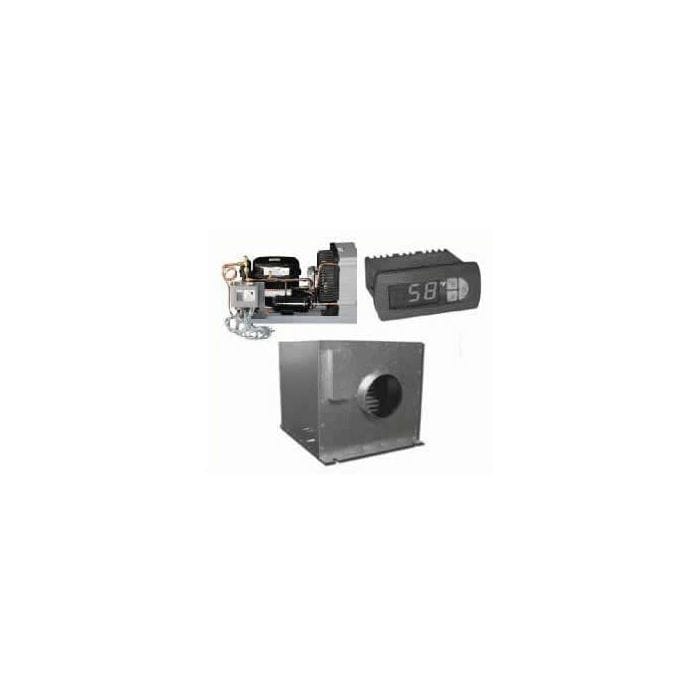
Commercial Split Wine Cellar Cooling Systems
Commercial split wine cellar cooling systems are designed to meet the demands of both residential and commercial wine storage applications. With customizable options ranging from 1,200 BTU to 40,000 BTU, these systems can support everything from a home wine cabinet to large restaurant wine rooms and commercial storage facilities.
Commercial split systems are built to handle higher heat loads than residential wine cellar refrigeration units, making them ideal for larger spaces and high-traffic environments. They also offer superior wine cellar humidity control and operate more quietly.
Commercial split systems are available in multiple configurations including ceiling-mounted, wall-mounted, rack-mounted, dual-zone, and fully ducted high-static systems. Proper system selection is critical to long-term wine preservation.
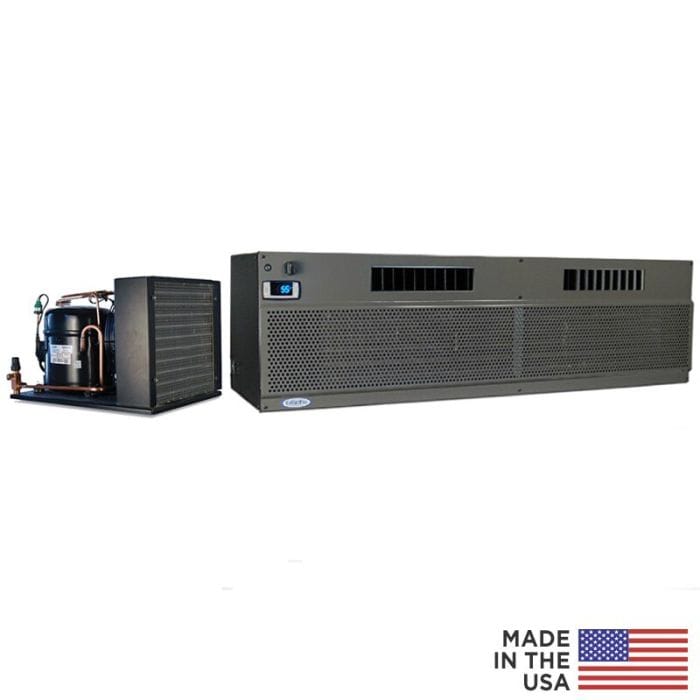
Ductless Split Wine Cellar Cooling Systems
Ductless split wine cellar cooling systems provide maximum flexibility with extremely quiet operation. These systems include an air handler installed inside the wine cellar and a separate condenser that can be placed outdoors or in another indoor location up to 100 feet away.
The components are connected by refrigerant lines and control wiring, and professional HVAC installation is required. Ductless split systems can be rack-mounted or ceiling-mounted, eliminating bulky equipment inside the wine room while supporting efficient wine cellar cooling performance.
By removing large mechanical components from the cellar, these systems maximize wine storage space while delivering a clean, modern appearance.
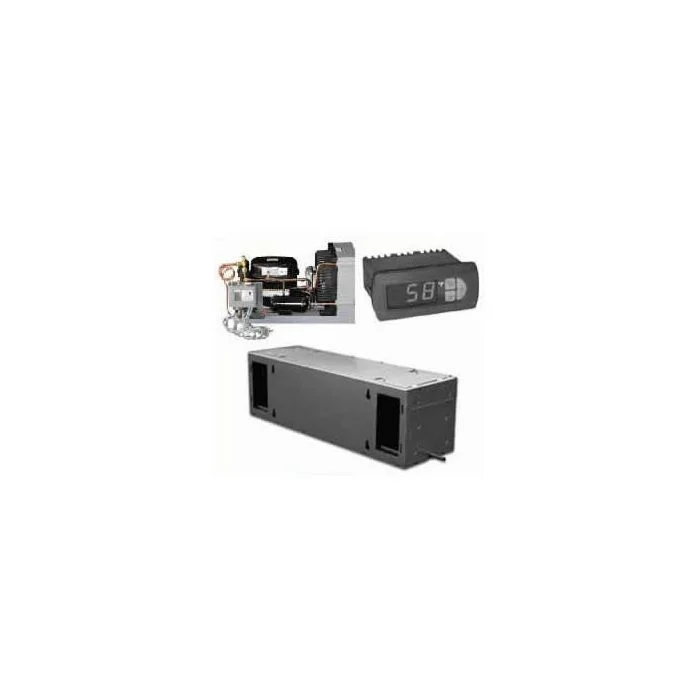
Rack-Mounted Commercial Wine Cellar Cooling Systems
Commercial-grade rack-mounted wine cellar cooling systems are engineered to support large and high-demand wine storage environments. These systems feature advanced temperature sensors, wine cellar humidity control systems, energy-efficient motors, and premium cooling components to maintain stable conditions in wine rooms of 3,000 cubic feet or more.
Rack-mounted split systems are designed for even air distribution and fast temperature recovery, performing reliably even in warm or challenging environments. Their compact housings allow for easier installation, servicing, and long-term maintenance.
Every rack-mounted system is selected based on a heat load calculation to ensure the wine cellar cooling unit is properly sized for the space.
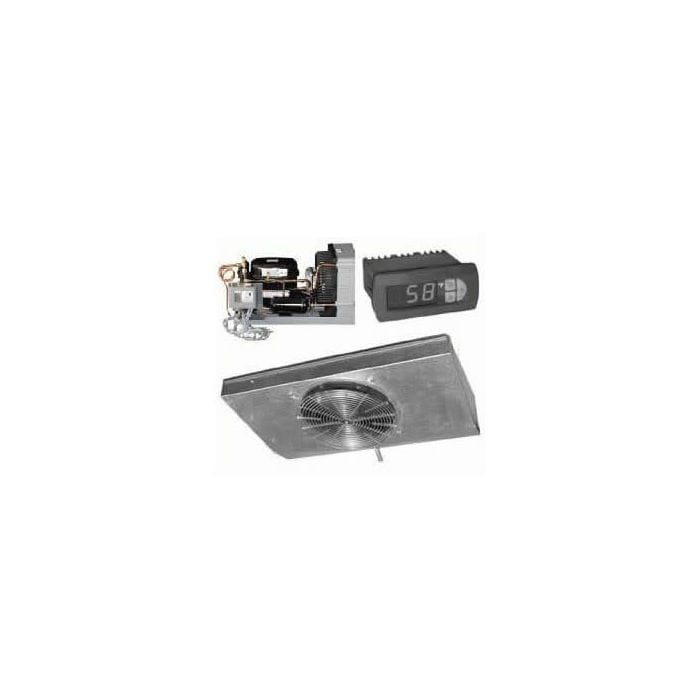
Ceiling-Mounted Split Wine Cellar Cooling Systems
Ceiling-mounted split cooling systems are a popular and discreet option for wine cellars. The evaporator is installed within the ceiling of the wine room, while the condenser is placed remotely to reduce noise and allow for efficient ventilation.
These wine cellar refrigeration systems are suitable for wine cellars of all sizes and layouts. Their low-profile design allows them to fit into tight ceiling spaces or between joists, while flexible condenser placement options provide greater installation freedom.
Ceiling-mounted split systems deliver consistent airflow and even temperature distribution throughout the cellar while operating very quietly.
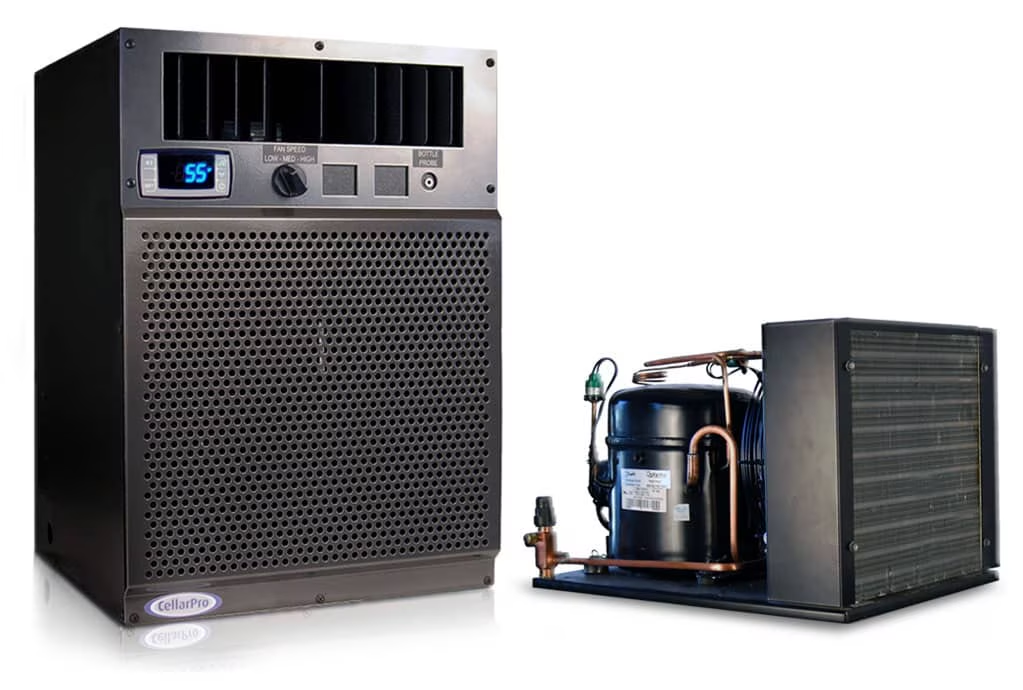
Split System Wine Cellar Cooling Units
Split system wine cellar cooling units separate the cooling components to provide quiet and efficient operation. The condenser, which generates heat and noise, is installed outside the wine cellar, while the evaporator is located inside. The two components are connected by refrigerant lines or ducting.
These systems offer exceptional design flexibility. The evaporator can be ducted, ceiling-mounted, or rack-mounted and is often concealed behind a discreet grille so no equipment is visible inside the wine room.
Split systems are ideal for custom wine cellars where aesthetics, quiet performance, and precise wine cellar climate control are priorities. System selection depends on factors such as cellar size, room location, glass usage, and available space for heat exhaust. Installation must be completed by a licensed HVAC professional.
What Does Wine Cellar Climate Control Involve?
Wine cellar climate control brings together the room enclosure, refrigeration, and installation infrastructure. Insulation, vapor protection, door sealing, glass, and equipment placement should be considered together before the design is finalized.
A beautiful wine cellar begins with an idea for your home. Turning that idea into a buildable space also means looking at details that finished photographs rarely show. Where will the cooling equipment go? What work will the installation require? How will the cellar fit into your wider renovation?
At Private Label Custom Cellars, we help you connect the design you have in mind with the scope behind it. Start with your proposed space, your questions, and the professionals already involved in your project.
The Infrastructure You Cannot See in a Finished Wine Cellar
When Kathleen asked what homeowners may underestimate at the beginning of a project, Alex identified refrigeration infrastructure as one of two main considerations.
“One is the infrastructure. It’s going to be the refrigeration and how that is going to be installed.”Alex, Private Label Custom Cellars
He explained that the choice between self-contained and split refrigeration affects the installation. In the split-system arrangement he described, a refrigeration line set connects the equipment inside the cellar to an exterior condensing unit. Accommodating that route can require work elsewhere in the house.
That is why the question is more specific than whether a cooling unit will fit inside the proposed room. The project also needs to consider where the equipment can be installed and how the necessary connections will reach it.
Alex emphasized that refrigeration is specialized equipment with both procurement and installation costs. Reviewing those requirements early gives the design conversation a more informed starting point.
A useful starting question: What work would be needed to install refrigeration in the space I want to use?
Plan the Room Before Finalizing the Equipment
Bring these topics into your consultation alongside the visual design. They help frame the questions your cellar specialist and project team need to resolve.
Size and Existing Construction
Share dimensions, available plans, and whether the cellar is part of a new build or an existing home. Identify surrounding rooms and areas your construction team can access.
Walls and Ceiling
Insulation slows heat transfer through the enclosure. Review materials and installation details with the project team and selected equipment requirements.
Moisture Protection
Vapor protection limits moisture movement through the enclosure. Its placement and continuity need review before wall and ceiling finishes conceal the assembly.
The Door and Threshold
Door seals help limit air exchange with surrounding rooms. Consider perimeter seals, the threshold, and how the door closes.
Walls and Glazing
Glass affects thermal performance. Consider the extent and configuration of glazing alongside refrigeration planning.
Airflow and Maintenance
Keep equipment airflow paths clear and allow maintenance access. Coordinate racking and finishes with the manufacturer’s installation guidance.
Include temperature and humidity in the discussion. Ask which conditions the proposed design is intended to support, how they will be monitored, and what the specified equipment can provide.
How Do Wine Cellar Cooling Systems Fit Into the Plan?
Alex described two main refrigeration configurations: self-contained and split systems. The distinction helps frame installation planning, while the proposed room determines which options deserve further review.
Self-Contained Systems
The primary refrigeration components are housed together. Equipment location, ventilation, and heat rejection still need consideration.
Ask: Where could the unit operate with the required clearances and ventilation?
Split Systems
The indoor equipment and remote condensing unit are separate, connected by refrigerant lines. Alex’s example used an exterior condensing unit.
Ask: Where could the condenser go, and how would the connecting lines reach it?
Installation Scope
An equipment choice should be considered alongside the proposed room and construction access. Alex’s comments highlight how refrigeration can introduce work beyond the cellar itself.
Ask: Which parts of the house would the installation affect?
For a more detailed comparison, visit our guide to types of wine cellar cooling systems: split vs. self-contained .
A Clear Conversation About the Investment
The second consideration Alex raised was cost. He described refrigeration, construction, glass, and other custom elements as significant parts of the project investment.
He also made an important distinction: most clients understand that a custom wine cellar will be an investment. A smaller group is caught off guard by the scope or cost. His approach is to discuss expectations at the beginning, before investing substantial time in design, and to remain transparent throughout the process.
“I try to be up front with them in the very beginning”Alex, discussing project expectations before detailed design
For your project, bring questions about the proposed refrigeration installation, construction work, glass, and team responsibilities into the initial discussion. A clearer understanding of what is involved helps you decide how to move forward.
Planning Your Wine Cellar Design and Installation
Begin with your space and the look you want to explore. The design discussion should also address refrigeration infrastructure and overall project scope.
Send Photos or Video
Show us the proposed area, along with any plans or examples of the style you have in mind.
Phone Consultation
Discuss your goals, initial scope, project team, and investment expectations.
Site Visit
Review the proposed space in person to better understand existing conditions.
Infrastructure Review
Consider the enclosure, refrigeration installation, and any work needed outside the cellar.
Design Direction and CAD
Refine the layout and appearance. CAD drawings or renderings may be included depending on the agreed scope.
Proposal and Build
Confirm the proposed work and responsibilities before moving into construction and installation.
Explore our custom wine cellar design and installation page for the wider process.
Bring Your Team or Ask About Turnkey Service
Bring Your Contractor or Design Team
If a general contractor or project manager is overseeing your home project, discuss how the specialized wine cellar work will fit into their construction scope. Explore our wine cellar contractor services for construction teams .
If an interior designer or architect is developing the concept, bring their plans into the conversation so the appearance and infrastructure can be considered together. See our partnership for interior designers and architects .
Use Private Label’s Turnkey Team
Starting with an idea and no existing project team? Ask about Private Label’s turnkey design and installation services.
We can discuss your proposed cellar and establish the scope and responsibilities for the work ahead.
Wine Cellar Climate Control FAQs
What might I overlook when planning a home wine cellar?
Alex highlighted refrigeration infrastructure and overall cost. A split installation may require refrigerant lines routed through the home to an exterior condensing unit, while refrigeration, construction, and glass all contribute to the project investment.
Can cooling installation require work outside the wine cellar?
Yes. In the split-system arrangement Alex described, the connecting refrigeration line set can require work elsewhere in the house. Discuss the proposed route and equipment locations before finalizing the design.
What is the difference between climate control and cooling equipment?
Cooling equipment is one component of the project. Climate-control planning also considers the enclosure, sealing, moisture protection, and installation infrastructure.
Do I need to choose a cooling system before contacting Private Label?
You can start by sharing your proposed space and design goals. Photos, video, dimensions, or plans give the initial conversation a practical starting point.
Can I involve my existing contractor or designer?
Bring your project team’s plans and questions into the consultation. Contractors and project managers can discuss construction scope, while interior designers and architects can share the design direction.
Planning a local project? Explore our custom wine cellars in Orange County .
Contact Us
Begin your journey with a complimentary consultation.
We’ll take the time to understand your vision, assess the character of your space, and tailor every detail to the needs of your collection.
From bespoke design to precision installation, our team delivers a seamless, white-glove experience.
We look forward to transforming your vision into an exceptional wine cellar!