Luxury Materials & Finishes That Define a Custom Wine Cellar
In the world of high-end wine storage, the materials you choose don’t just anchor the look of the space — they shape the experience of it. Thoughtfully selected luxury wine cellar materials and finishes protect bottles for decades while showcasing them in a way that feels intentional, curated, and unmistakably refined.
Great materials elevate your cellar from a functional storage room to a living gallery — one where craftsmanship, aesthetics, and performance intersect through thoughtful custom wine cellar design and installation.
Traditional Elegance: Warm Wood & Timeless Finishes
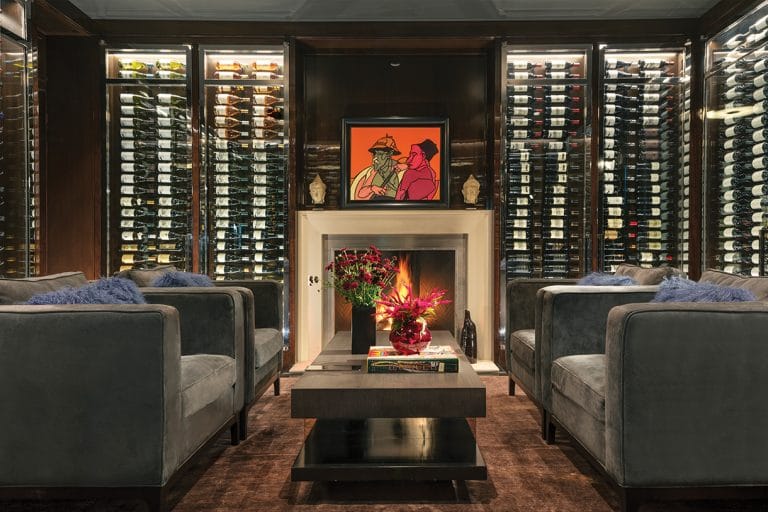
Classic wine cellars lean into rich wood tones and tactile finishes that evoke heritage and warmth. These wood wine cellar design elements remain foundational in residential installations.
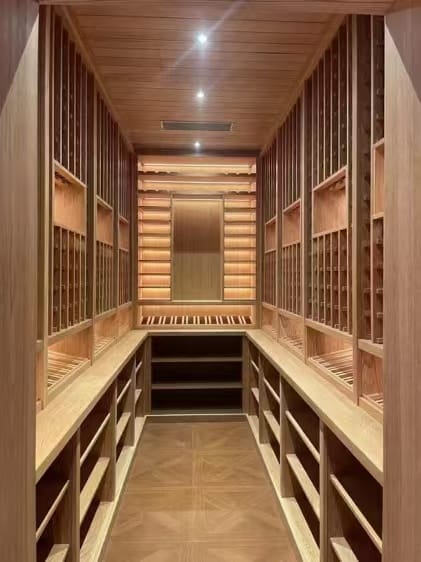
- Mahogany or white oak millwork — deep, inviting hues that anchor a classic residential cellar with tradition and character.
- Solid bronze hardware & coffered ceilings — details that feel bespoke and artisanal.
- Natural stone floors (limestone or marble) — a luxurious foundation that ages beautifully.
This aesthetic resonates with collectors seeking a cellar that feels like a private study, tasting room, or legacy space.
Transitional Style: The Best of Both Worlds
For homeowners balancing classic architecture with modern interiors, transitional finishes blend warmth and contemporary clarity.
Common custom wine cellar finishes include:
- Walnut cabinetry with low-sheen finishes for refined texture.
- Brushed stainless accents that feel subtly modern.
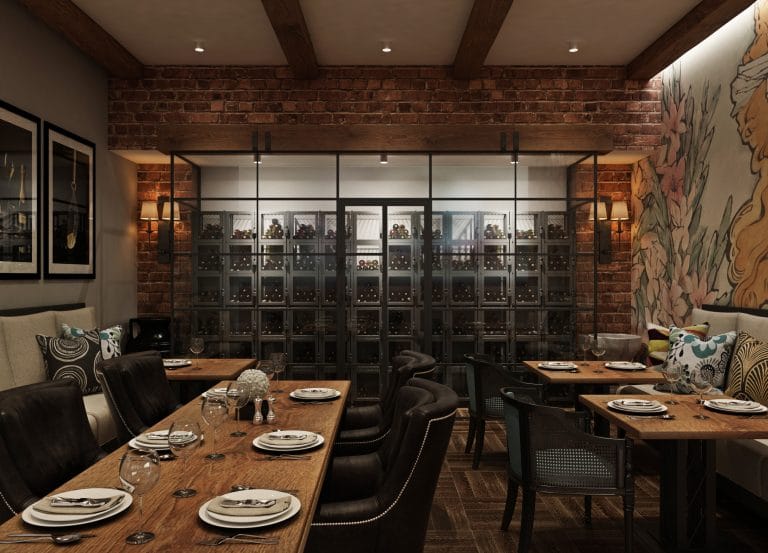
- Framed glass entries with low-iron laminated panels for clarity and display impact.
This approach bridges design languages, making it ideal for open floor plans where cellar visibility matters.
Modern Minimalism: Sleek, Architectural Materials
Modern wine rooms emphasize geometry, transparency, and structure. These modern wine cellar materials shift focus from ornamentation to presentation.
Key elements include:
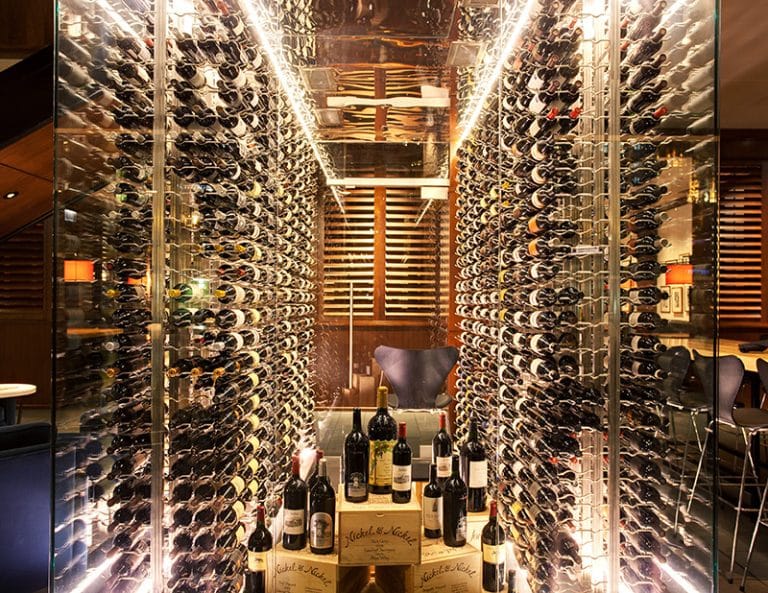
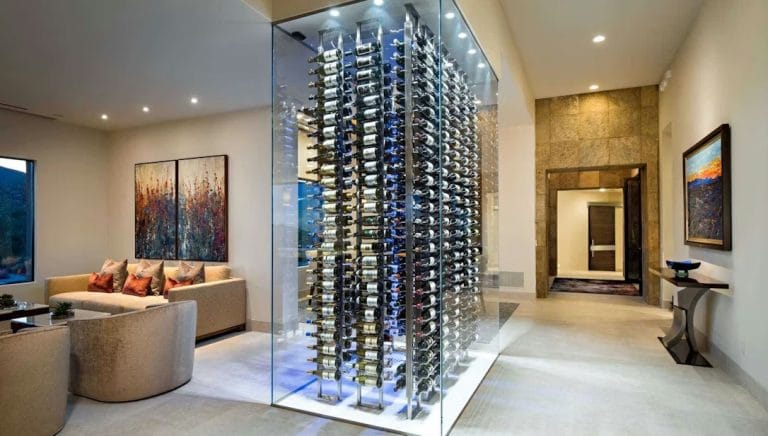
- Ultra-clear laminated glass wine cellar materials for gallery-style enclosures.
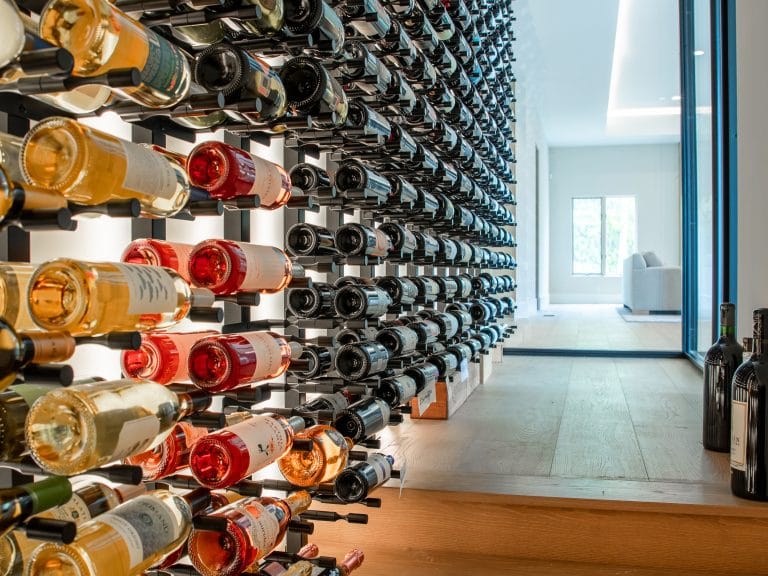
- Powder-coated steel or aluminum racks.
- Large-format porcelain or honed concrete flooring.
- Integrated linear LED lighting.
These environments feel sculptural — where architecture and wine collection become one visual composition.
Material Considerations That Matter
Wood
Wood remains foundational across many wine cellar materials selections due to its warmth and adaptability. Species like white oak and walnut are durable and perform well in controlled humidity environments.
Proper drying, sealing, and finishing ensure long-term stability without warping.
Metal & Glass
Metal introduces architectural precision — especially when paired with glass. Modern metal wine cellar racking systems create label-forward displays while maximizing capacity.
Glass elements open sightlines and transform storage into a showcase. Laminated, UV-blocking panels are essential to protect wine from light exposure.
Stone & Flooring
Flooring materials must perform as beautifully as they look.
Natural stone, polished concrete, and porcelain slabs remain preferred choices due to their stability in cool, humid cellar environments.
These surfaces complete the tactile experience of premium wine cellar material selection.
Lighting & Hardware: The Details That Elevate
Luxury finishes extend beyond primary materials.
Enhancement elements include:
- LED lighting with low color temperature to enhance label readability without heating the space.
- Premium hardware finishes in brushed bronze, nickel, or matte black give your cellar a tailored, cohesive style.
Every detail contributes to both preservation and presentation.
Finish Selection: Where Style Meets Story
Choosing materials is where your cellar takes on personality — often shaped by collaboration between the client’s vision and the expertise of the designer behind the project.
Your finish palette should align with:
- Your design aesthetic (classic warmth or clean modern)
- How you entertain and display wine
- The architecture of your home
From rich wood racks to glass-framed display walls, every layer contributes to the narrative of the space.
Start Designing Your Luxury Space
Whether your vision leans traditional, transitional, or contemporary, selecting the right luxury wine cellar materials and finishes ensures your cellar protects wine while elevating your environment.
A well-designed cellar doesn’t just house wine — it celebrates it.