Design, Engineering & Craftsmanship for the Modern Collector
A custom wine cellar is not just a storage solution — it is a controlled architectural environment designed to protect, showcase, and elevate your collection.
Whether you’re building your first residential wine room or designing a gallery-level display for a luxury estate or restaurant, the difference between a basic storage space and a truly exceptional custom wine cellar lies in thoughtful planning, proper engineering, and refined craftsmanship.
This residential custom wine cellar planning guide outlines the foundational decisions that shape performance, longevity, and visual impact.
1. Understanding the Purpose of a Custom Wine Cellar
At its core, a custom wine cellar serves three essential functions:
- Preservation — Maintaining optimal temperature and humidity
- Organization — Smart racking layouts that grow with your collection
- Presentation — Creating a visual experience worthy of your investment
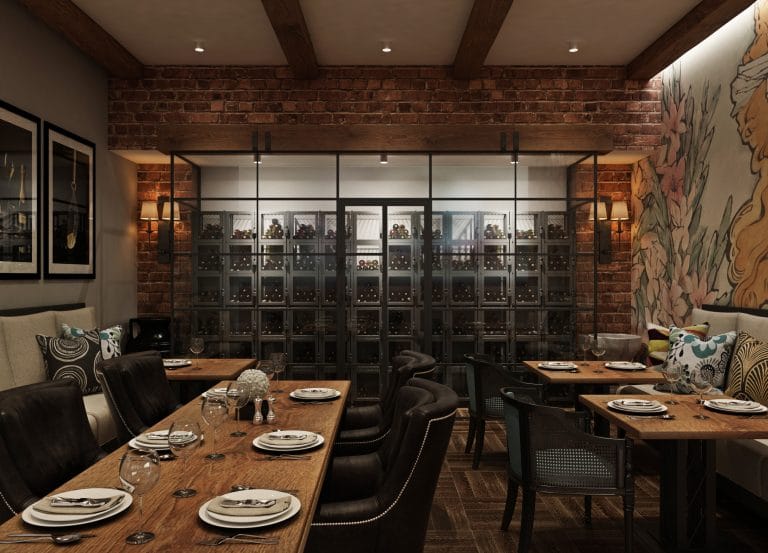
From compact residential glass wine rooms to expansive traditional wood cellars, every luxury wine cellar design should balance performance and aesthetics.
The best cellars protect first — then impress.
2. Choosing the Right Location
A custom wine cellar can live in a variety of residential environments:
- Basements
- Under staircases
- Dining rooms
- Adjacent to kitchens
- Dedicated tasting rooms
- Feature walls in open-concept homes
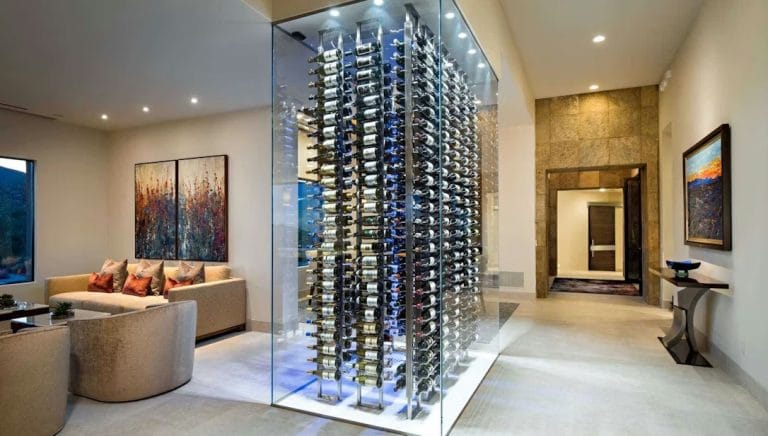
Basements naturally offer insulation advantages, but today’s residential glass wine rooms are increasingly becoming architectural centerpieces within primary living spaces.
Location directly impacts insulation strategy, cooling requirements, and glass specifications — making early wine cellar layout planning critical.
3. Engineering the Climate: The Non-Negotiable Foundation
Wine thrives in stable conditions, which is why professionally designed wine cellar climate control systems are essential to long-term preservation.
- Temperature: ~55°F (consistency matters more than precision)
- Humidity: 55–70%
- Minimal UV exposure
- Low vibration
A properly executed environment includes:
- Continuous insulation
- Vapor barrier placement
- Airtight door systems
- Dedicated climate control equipment
Glass wine rooms require even more precision. Low-E insulated glass, thermally broken framing, and properly sized cooling systems ensure modern design does not compromise preservation.
This is where expertise matters most.
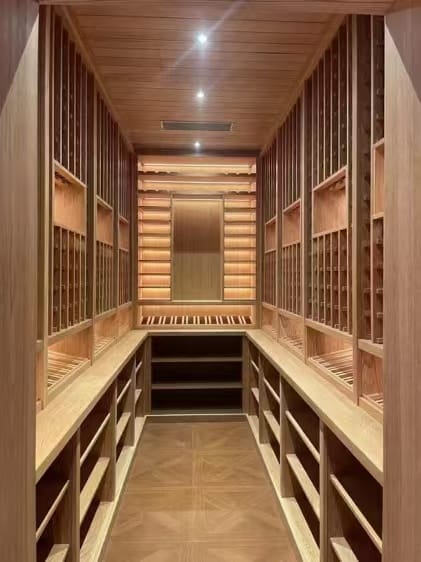
4. Design Styles: Traditional, Modern & Transitional
Traditional Wine Cellars
- Rich wood racks (walnut, mahogany, white oak)
- Diamond bins and horizontal storage
- Warm ambient lighting
- Old-world elegance
Traditional cellars feel intimate, timeless, and heritage-inspired.
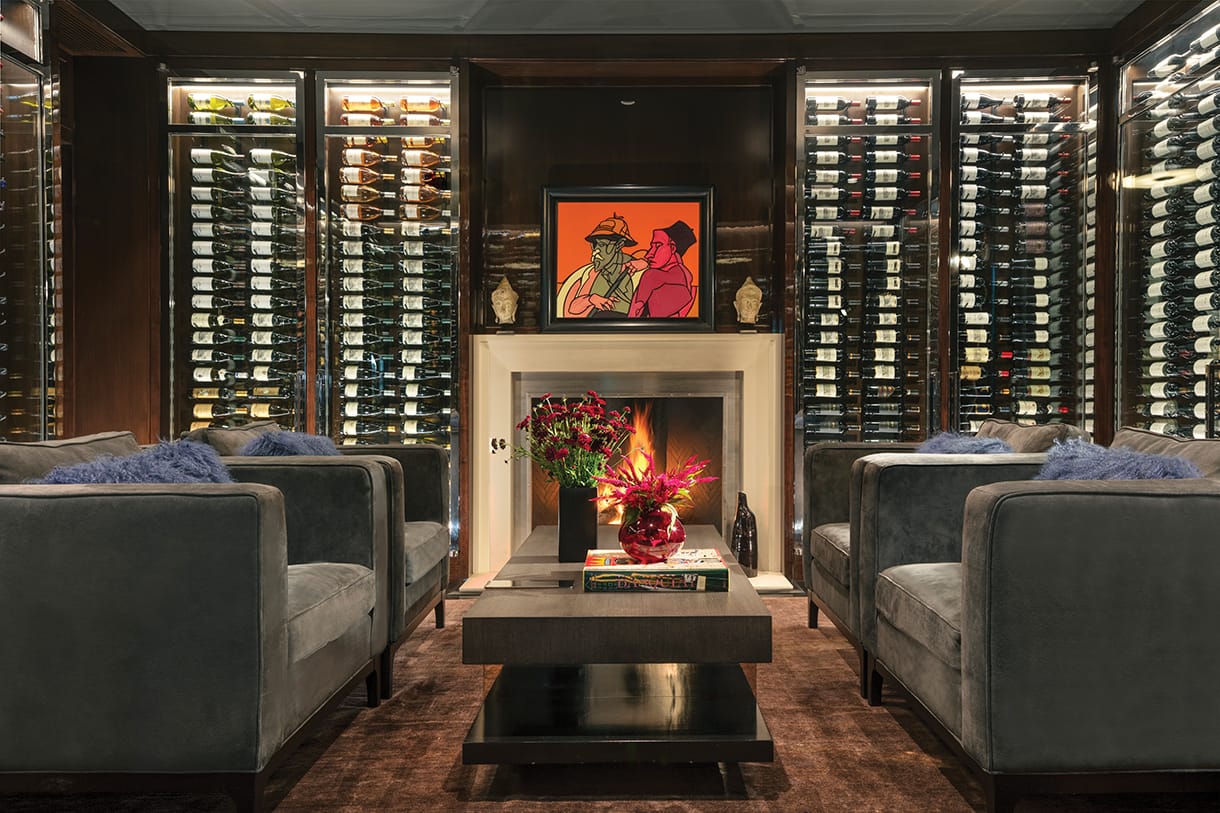
Modern Wine Cellars
- Metal racks or cable systems
- Frameless glass enclosures
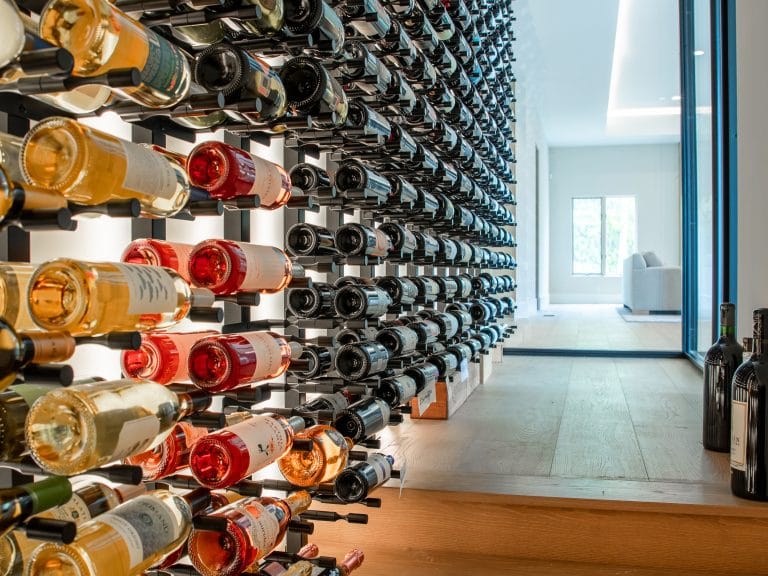
- Label-forward contemporary display
- Minimalist architectural lines
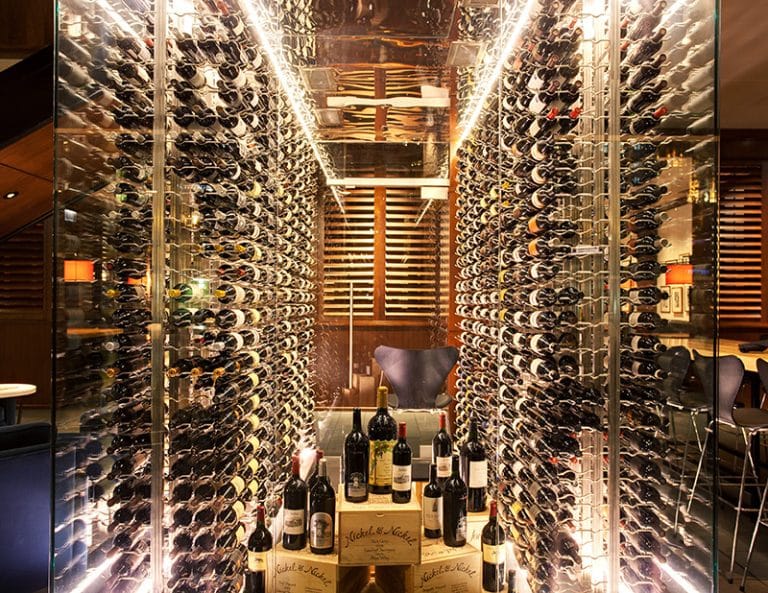
Modern installations transform bottles into visual art within residential spaces.
Transitional Designs
A curated blend of wood and metal racking, combining warm materials with clean lines — ideal for homeowners balancing classic and contemporary design preferences.
To see how these layouts and design styles translate into completed spaces, explore our custom wine cellar gallery.
5. Racking Systems: Function Meets Visual Impact
Your racking layout determines how your cellar lives day to day.
Common custom wine cellar planning configurations include:
- Wood racks for traditional warmth
- Metal racks for architectural precision
- Floating or cable systems for modern display
- Feature walls for label-forward presentation
- Bulk storage zones for aging collections
Well-executed wine cellar layout planning balances storage density with display drama.
We design from the bottle out — ensuring capacity, accessibility, and visual hierarchy are all considered.
6. Materials & Finishes: Elevating the Experience
Luxury wine cellars are defined by material quality.
Common premium finishes include:
- White oak, walnut, or mahogany millwork
- Powder-coated steel racking systems
- Ultra-clear laminated glass panels
- Natural stone or porcelain flooring
- Integrated LED lighting systems
Finishes must perform inside climate-controlled environments — not simply look beautiful at installation.
7. Lighting: Subtle, Strategic, Protective
Lighting in a custom wine cellar should:
- Highlight bottles without producing heat
- Avoid UV exposure
- Create depth and ambiance
- Enhance label visibility
Low-voltage LED strip lighting integrated into racking systems provides dramatic yet safe illumination.
The right lighting transforms a cellar from storage room to showcase.
8. Understanding Investment Levels
Custom wine cellar costs vary depending on:
- Size and bottle capacity
- Level of glass integration
- Wood vs. metal rack systems
- Structural modifications required
- Climate control complexity
- Finish level and detailing
Entry-level showcase glass walls may begin in the mid-five figures. Full walk-in residential wine cellar planning projects scale higher depending on scope, materials, and architectural detailing.
Clarity of design intent from day one drives cost alignment.
9. Designing for Growth
The smartest collectors plan ahead.
Forward-thinking wine storage planning includes:
- Expansion panels
- Modular racking
- Extra cooling capacity
- Flexible display zones
Your collection will evolve. Your cellar should evolve with it.
10. The Installation Process
A professionally executed custom wine cellar build typically follows:
- Demolition and structural preparation
- Insulation and vapor barrier installation
- Cooling system integration
- Drywall or specialty wall finishes
- Racking installation
- Glass installation
- Lighting and finishing details
Precision at every stage ensures long-term performance and a flawless final presentation.
Why a Custom Wine Cellar Is Worth It
A properly designed wine cellar:
- Protects your investment
- Increases home value
- Enhances entertaining
- Creates architectural distinction
- Reflects your personal taste
It becomes more than storage. It becomes part of your lifestyle.
Start Designing Your Custom Wine Cellar
Thoughtful luxury wine cellar planning ensures the final space protects your collection while elevating your home environment. Explore our custom wine cellar design and installation services to begin planning your project.
- A sleek residential glass wine display
- A warm traditional wood cellar
- A contemporary metal rack showcase
- Or a fully bespoke wine room built from the ground up
We design and build custom wine cellars that reflect the same planning, engineering, and craftsmanship outlined throughout this guide — engineered for preservation and crafted for impact.
Let’s create a cellar that protects your collection — and elevates your space.